
Teams that Win
I get asked this question almost as often as my kids ask for snacks (which is… constantly):
“How do you build and maintain a high-performing team?”
The answer isn’t one-size-fits-all, but I do believe in two foundational pillars:
- Hiring the right people
- Creating a team environment rooted in trust and open communication
Let’s break it down. I’ll be bringing in both The Birkman Method and Patrick Lencioni’s Five Dysfunctions of a Team to illustrate why these things matter.
Step 1: Hire the Right People — Talent + Mindset
Hiring isn’t just about skills on paper or résumé highlights. Some people interview better than they perform. Others may not shine in the interview, but thrive in the actual work. That’s why a structured, intentional hiring process is essential: interview training, clear criteria, question banks, and consistency in evaluation.
Once you get the basics right, it comes down to understanding the type of hire you’re making.
Here’s a simple framework I use:
| Type | Talent | Mindset | What to Know |
| AA | A | A | The dream. Skills + coachable, adaptable mindset. |
| AB | A | B | Skilled, but closed off to growth. Often, there is a cultural mismatch. |
| BA | B | A | May need support ramping up, but will likely surpass ABs over time. |
| BB | B | B | Just don’t. |
Talent = knowledge, skill, aptitude
Mindset = adaptability, humility, grind
This is where The Birkman Method becomes an unfair advantage.

The Birkman Method helps you understand how someone is wired—not just what they do, but what they need to do their best work. It reveals:
- Usual behavior (how you show up when things are going well)
- Underlying needs (what keeps you feeling balanced)
- Stress behavior (how you react when those needs aren’t met)
This insight can tell you whether someone will thrive—or just survive—on your team.
Step 2: Build a Culture Where Trust Can Thrive
Even the best hire will underperform in a toxic or misaligned team environment. And in today’s fast-moving world, one thing is guaranteed: change.
Teams change. People leave. Priorities shift. Roles evolve. It’s like you’re building a LEGO set and someone swaps out your bricks halfway through. You’re left trying to fit new pieces into a half-built structure.
The glue that holds it together? Trust and communication.
But not just any trust, but vulnerability-based trust, as outlined in Patrick Lencioni’s The Five Dysfunctions of a Team.
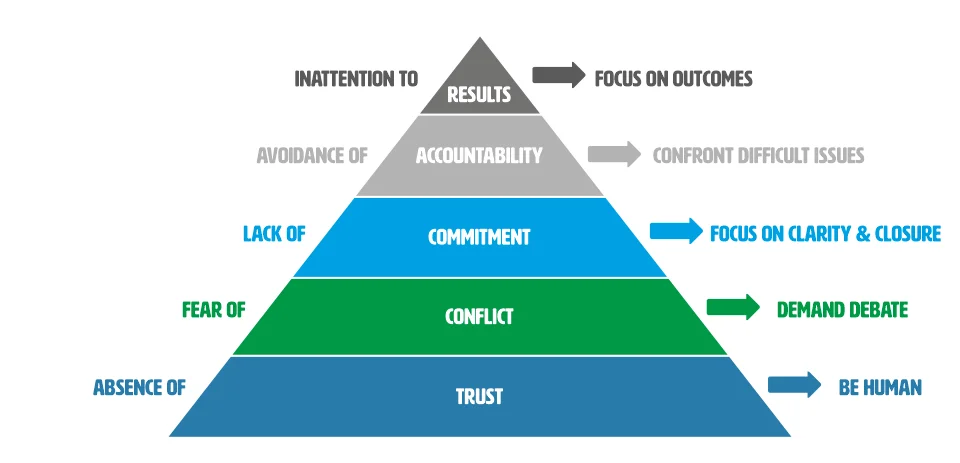
Team dysfunction begins with a lack of trust and infects the team.
This isn’t theoretical. When trust is missing, teams hesitate to speak up, gloss over issues, and operate in silos. Deadlines slip. Tensions rise. Innovation dies.
But when trust is strong and when people can say,
“I don’t know,”
“I made a mistake,” or
“I need help.”
Teams unlock: healthy conflict, shared commitment, peer-to-peer accountability, and real results.
Time Is Forgotten
People talk about talent, capital, and IP as key assets. But your most precious resource? Time.
You can find more money. You can hire more people. But you cannot make more time. We complain about it, but we feel hopeless because we can’t harness more of it.
High-performing teams don’t just succeed at a single task—they make the most of their time. They adapt. They communicate. They recover faster from setbacks. And they don’t waste time navigating hidden tensions or interpersonal landmines.
Tools like Birkman accelerate this process. By helping teammates understand each other’s differences—communication styles, stress responses, work motivators—you minimize friction and speed up trust.
Bonus Perspective: Lessons from the Playoffs
Think of professional sports. During the regular season, highlight reels show off the flashy offense. But in the playoffs, the cracks show. Weaknesses get exposed.
Great teams don’t just play well when it’s easy. They adapt under pressure, support each other, and adjust on the fly.
That’s what high-performing teams do in business. It’s not about having all A-players. It’s about building chemistry, creating trust, and making sure everyone is aligned under pressure.
Focus on Impact:
- Hire for talent and mindset
- Use tools like Birkman to go deeper than surface-level fit
- Prioritize trust and open communication over superficial harmony
Don’t waste time—the most finite asset in business—on the wrong people or wrong dynamics.
Leave a Reply